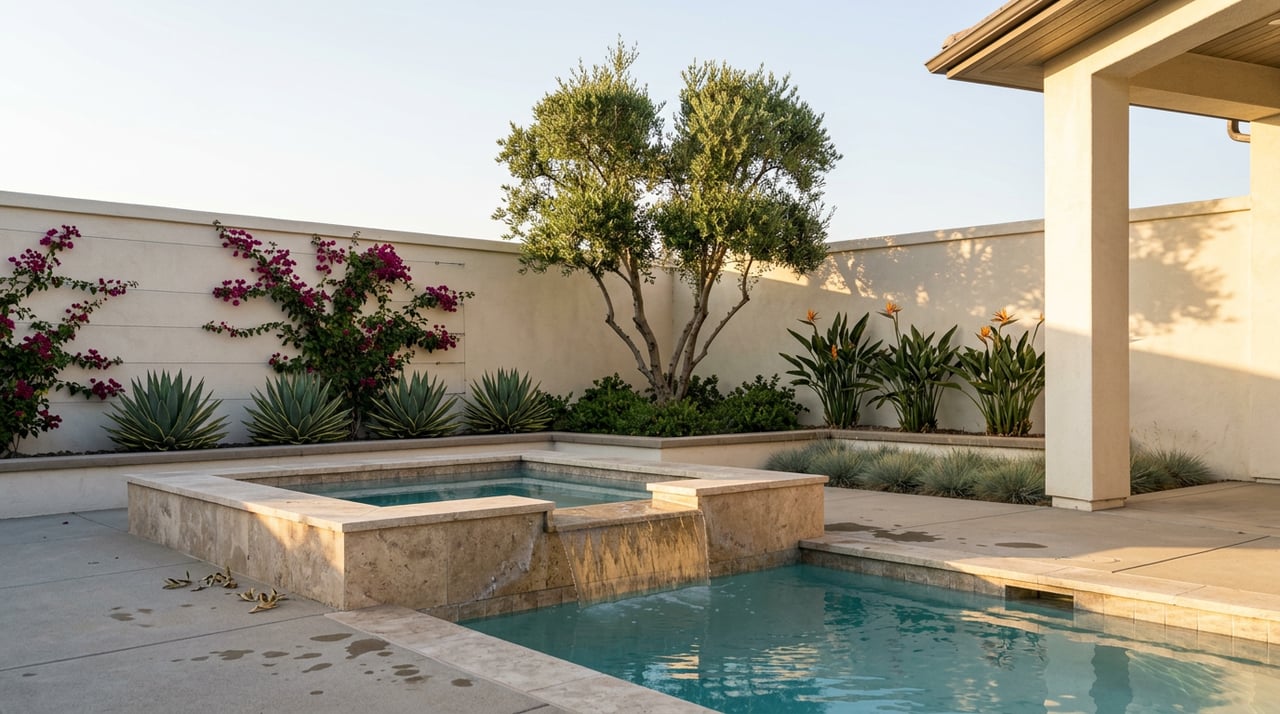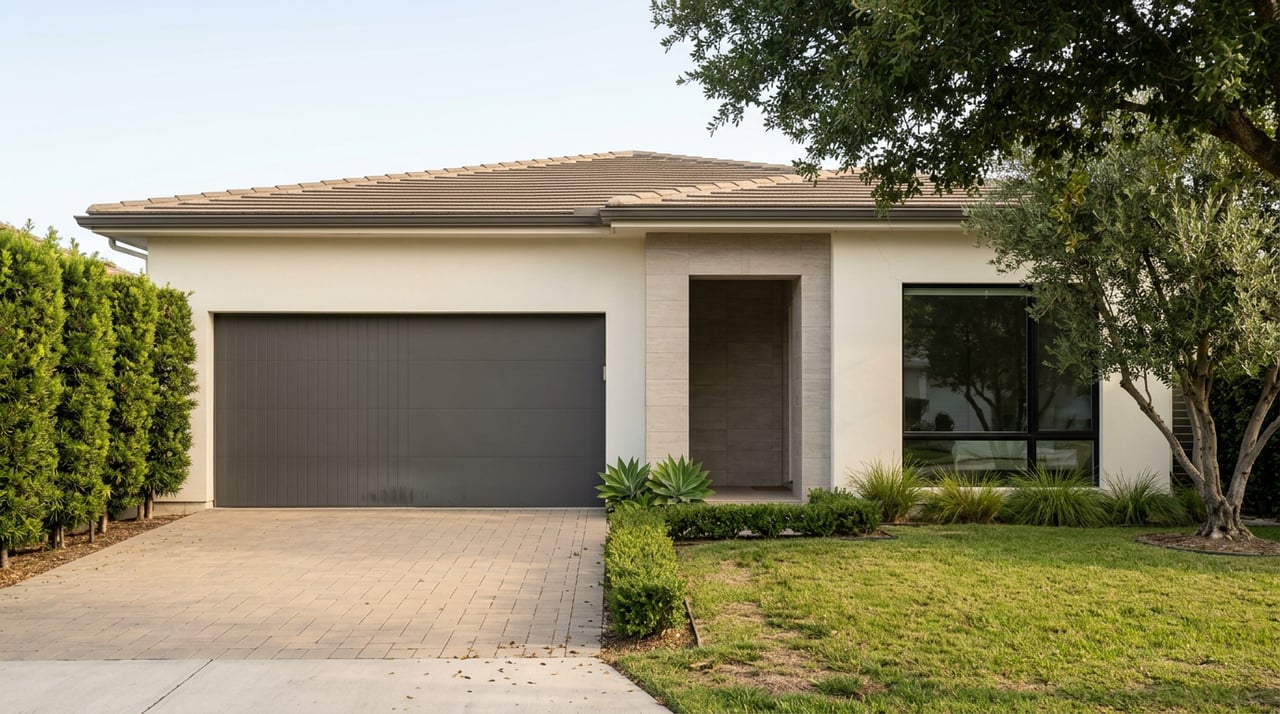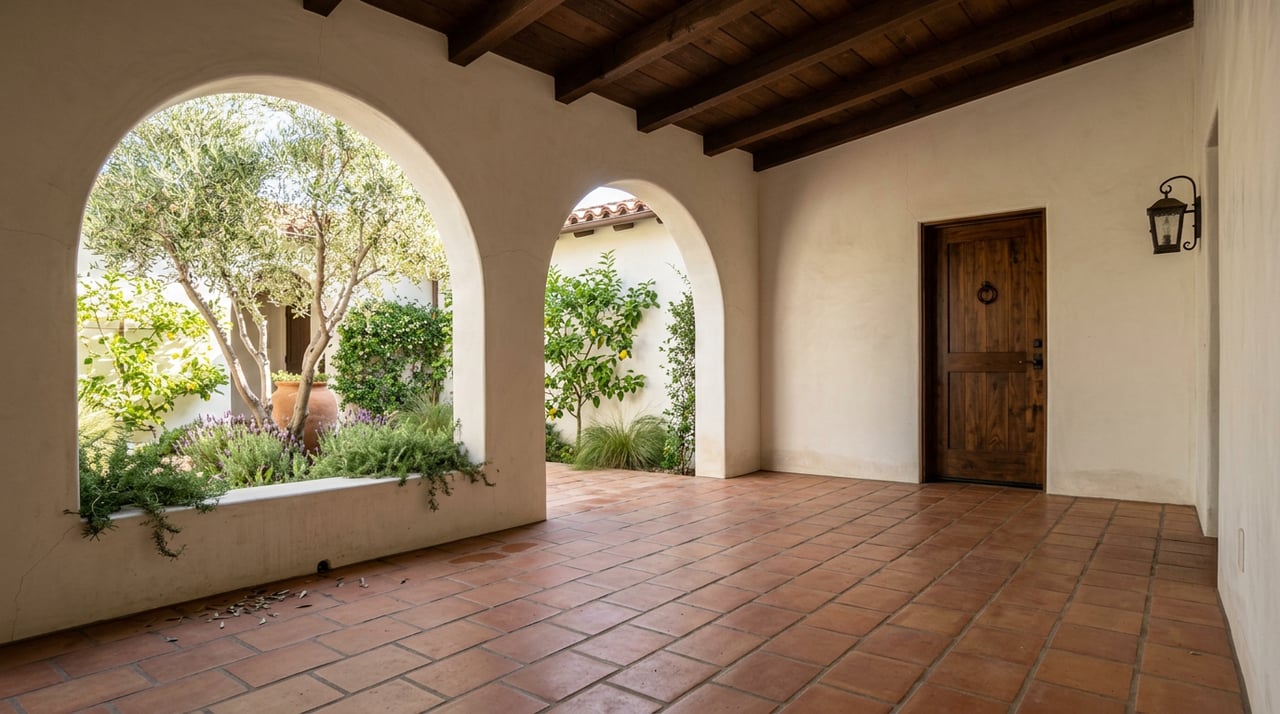
Most luxury purchases in North County turn on the same short list of variables: price, condition, view, and how quickly the appraisal lands. A Covenant purchase in Rancho Santa Fe adds one more variable, and it is the one that most often quietly reshapes a deal in the last two weeks of escrow. It is not the septic. It is not the well. It is the paper trail behind every wall, gate, pool coping, and guest cottage you can see from the driveway.
The thesis of this guide is simple. Inside the Covenant, the recorded governance is part of the asset. When a prior owner added a pergola, resurfaced a facade, or converted a barn into a studio without clearing the Art Jury, that decision transfers with the deed. The buyer inherits both the improvement and the exposure. Everything below is organized around finding those items before, not after, you sign.
The paper trail is the property
The Covenant is a protective agreement first adopted in 1928 and managed by the Rancho Santa Fe Association; it is bound to the property and transfers with the property when it is sold, obligating the new owner to comply with the same requirements as other Covenant owners. That single sentence explains why Covenant diligence looks different from a diligence pass in Del Mar or Carmel Valley.
Practically, this means an unapproved fence or an unpermitted pool house is not a prior owner's problem. It is a title-adjacent condition attached to a parcel you are about to own. As one local advisory summary puts it plainly, if you are buying or selling, collect prior approvals and as-built plans, because unapproved changes are a common disclosure and title issue that you want to understand early.
Ask for the file before you remove contingencies:
- All Art Jury approval letters for exterior work since original construction
- As-built drawings that match what is currently on the ground
- Any correspondence from the Association about open violations or pending enforcement
- Landscape and hardscape approvals, including fencing, gates, and lighting
If the seller cannot produce these, that is data. It usually means one of two things. Either the estate was maintained meticulously and the file is retrievable from the Association, or a prior improvement was never submitted. Both scenarios are workable. Neither is a surprise you want at day 14.
What actually triggers Art Jury review
Buyers are frequently told the Art Jury reviews "big projects." That understates the scope. Expect review for new construction, major remodels, guesthouses, ADUs, barns and arenas, pools, fencing and gates, hardscape and grading, major landscape changes, and sometimes exterior color changes.
The review is not procedural. This isn't a rubber-stamp approval where meeting numerical requirements guarantees permission to build. The Art Jury exercises genuine aesthetic judgment, evaluating whether your proposed structure harmonizes with its site and the community's historic rural character.
Two implications follow. First, if you are buying with a renovation in mind, the seller's existing plans and the Art Jury's prior comments on the parcel are more valuable than any generic remodel comp. Second, timing matters. The local Art Jury oversees this process and is responsible for reviewing and approving building applications, and their meeting schedule varies, typically occurring once or twice a month. A design change you assume you can push through in 30 days may take a full quarter if it slips a cycle.
Two approval systems, running in parallel
This is the piece most first-time Covenant buyers miss. Association approval is not a substitute for county permits. Association approvals do not replace county or state permits. You still must meet County of San Diego requirements for building, grading, septic or sewer, and environmental rules.
The order of operations for the RSF Association Building Department is worth reading once, on the record: send approved County plans via mail, delivery, or digitally, and plans must show perforations indicating County review and approval. County first, then Association intake.
For a buyer, the diligence question becomes: does the property's historical file show both threads? An approved Art Jury letter with no matching county-perforated plans, or county-permitted work with no Art Jury sign-off, is a gap. Gaps are negotiable. They only become non-negotiable when they surface after close.
The AB 38 letter you should ask for by name
Rancho Santa Fe sits in fire country, and California codified that reality into the sale process. Sellers in High or Very High Fire Hazard Severity Zones must address defensible space requirements at sale under AB 38, so plan for an inspection or documentation early and include receipts or compliance letters in your disclosure file. The California Board of Forestry AB 38 overview is the reference document.
For Covenant parcels specifically, the local authority is the Rancho Santa Fe Fire Protection District. Ask the listing side for a written defensible-space compliance letter or a signed inspection form. If it is not in the disclosure package, that is a legitimate request to make in writing before the inspection contingency expires. The cost of remediation on a two-acre estate lot is not trivial, and the Association's landscape guidelines are more restrictive than a raw perimeter clear-cut. You want that scope defined before it becomes yours.
What ownership actually buys you
Covenant title carries privileges that other Rancho Santa Fe communities cannot replicate. These are worth verifying line by line during escrow because they factor into the valuation you are paying for.
| Privilege | What to confirm |
|---|---|
| Rancho Santa Fe Golf Club eligibility | Membership is available only to Covenant property owners and cannot be purchased separately |
| Private trail network | The Covenant maintains a system of private riding and walking trails exclusive to residents |
| RSF Tennis Club | Access is limited to Covenant residents |
| Private sports fields | The Field and Richardson Field are managed by the Association for resident and organized youth use |
| RSF Connect fiber | High-speed service by Race Communications is available inside the Covenant |
| Village services | Mail is picked up at the village post office; there is no home mail delivery |
On the Golf Club specifically, the framing to keep in mind: ownership grants eligibility for membership at the Rancho Santa Fe Golf Club, the Max Behr-designed course that opened in 1929 and hosted the original Bing Crosby Clambake tournaments; this benefit is exclusive to Covenant property owners and cannot be purchased separately, and for serious golfers, this membership opportunity alone can influence the decision between Covenant land and properties in surrounding communities. Eligibility is not automatic membership. Confirm the current initiation process with the club directly before you assume it is a same-week transition.
Assessments, the number nobody mentions on portal pages
Portal listings will not show you what running a Covenant estate actually costs at the Association level. The assessment math is public and predictable. Yearly dues are assessed at 14 cents per every $100 of property value, as shown on the San Diego County tax assessor's roll.
On a $6M assessed valuation, that is roughly $8,400 per year in Association assessments alone, separate from property tax, sub-association dues where applicable, and any special assessments the board approves in a given cycle. Ask for the most recent board minutes and reserve study during the disclosure period. A large planned capital project can shift the number materially in a year you were not expecting.
A due-diligence order of operations
Run these in this sequence. The earlier items surface issues that make the later items either urgent or irrelevant.
- Order the RSF Association resale disclosure package the day escrow opens. Statutory timeframes apply, and the file drives most of the questions below.
- Pull the preliminary title report and cross-check recorded easements, especially trail easements crossing the parcel and any recorded conditions from prior Art Jury approvals.
- Request the Art Jury approval history from the Association for every exterior improvement visible on the property.
- Match those approvals to County of San Diego permits for the same work. Flag anything that appears in one system but not the other.
- Request the AB 38 defensible-space documentation from the seller in writing.
- On equestrian parcels, verify siting compliance for barns, paddocks, and arenas. Covenant zoning is generally structured around a minimum acreage per horse, and equestrian structures go through the same Art Jury review as primary residences.
- Review recent board minutes for pending special assessments or major community projects.
- Confirm septic and well records, and clarify which parcels are on the Santa Fe Irrigation District versus private systems.
- Sequence any planned post-close renovation against the Art Jury's meeting cadence so your design timeline is realistic.
FAQ
Can the Art Jury actually block a project I want to do after I close? Yes. The review is discretionary, not a checklist, and the Association's authority to enforce its standards has been affirmed in California appellate proceedings. If your purchase thesis depends on a specific renovation, get a design pre-consult with an architect who has cleared the Art Jury before, ideally before your inspection contingency expires.
How do I find out if a specific improvement was ever approved? Ask the seller and the Association concurrently. The Association's Building Department accepts inquiries at the addresses listed on its architectural review page. If a record cannot be produced, treat the improvement as unapproved and negotiate accordingly.
Is the RSF Golf Club membership automatic when I close? No. Ownership creates eligibility, not membership. Contact the club directly during escrow to understand current initiation timing and cost.
What happens if I inherit an unapproved structure and do nothing? It remains a live disclosure and enforcement risk that transfers to your next buyer. Most owners resolve it either through an after-the-fact approval submission or a documented removal. Doing nothing is a decision to defer the problem, not to solve it.
The Covenant rewards buyers who treat the file as part of the property. When the paper matches the parcel, closings are quiet and post-close projects move on schedule. When it does not, the friction is entirely fixable, but only if you find it before the calendar closes on your contingencies.
If you are evaluating a Covenant estate this quarter and want a second read on the disclosure package before you remove contingencies, Julie Butler and the Butler Group team can walk the file with you. Get your free North County home valuation to start the conversation.